Watching well
How to watch flamenco: jaleo and duende
What the shouts from the stage mean, what duende is, why the footwork sounds the way it does, and the small courtesies that keep a quiet room quiet.
Reserve your flamenco hour ↗Quick answer
Watch with your ears as much as your eyes. Expect shouts of encouragement from the performers (jaleo), footwork that works as percussion, and a few seconds of silence before the guitar begins. Applaud at the end of a piece, keep your phone away, and ask the host about photos before the show. Duende, the rare moment when everything lands, cannot be planned, so let it happen.
Jaleo: the voices from the stage
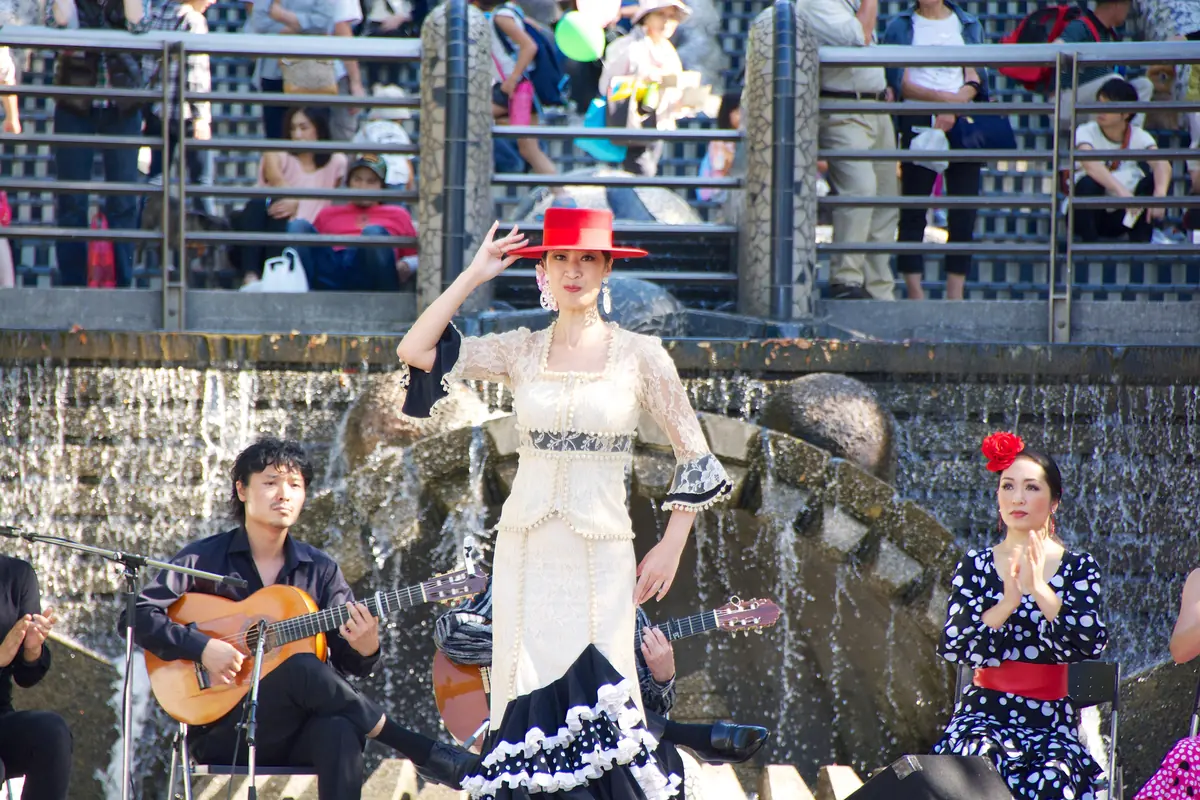
Jaleo is the rhythmic encouragement that performers and onlookers call out during a piece. Wikipedia's article on flamenco says the cry olé may come from a Hebrew verb, and that jaleos arose in Triana from festive performances of corridos and soleares. In a small room you may hear short shouts from the stage itself, a rhythmic clapping, or a murmured word of praise. They are not interruptions. They are part of how the group keeps its energy up.
Duende
Duende is flamenco's word for a mysterious, hard-to-name charm that goes beyond technique and inspiration. Wikipedia quotes Federico García Lorca on the subject: "To search for the duende there is no map or exercise." Performers are said to have duende when it arrives, and it cannot be ordered. You will not find it in a programme note. If a hush falls over the room and nobody reaches for a glass, that is as close as an audience gets to seeing it.
The sound of the feet
Flamenco footwork is fast and precise, and the shoes carry small nails in the toe and heel, which makes each step audible. That explains the percussive crack you hear during a dance. Wikipedia describes the footwork as lightning-fast and notes the rhythmic stamping that gives it its character. In a small tablao you hear it directly through the boards, which is a good reason to choose a seat where you can see the dancer's feet.
The guitar and its interludes
Guitarists are called tocaores, and the melodic passages they play between sung verses are called falsetas. Wikipedia notes that the guitar usually has a cypress body. UNESCO says the guitar has grown far beyond a supporting part. Listen for the moments when the singer stops and the guitar carries the mood alone: that is where the instrument speaks for itself rather than following.
Dress and props
Wikipedia describes the traje de flamenca as the dress traditionally worn by women at festivals in Andalusia, and says the frilly, spotted dresses of the tourist style derive from the Sevillanas dress of the Seville Feria. In improvised flamenco, castanets are not often used, but modern dancers may use canes, shawls and fans as props. What the performers wear is part of the picture, but it varies, so do not expect any particular costume.
Silence, applause and phones
A flamenco room is quiet before a piece begins. Wait for the silence to end naturally, applaud at the end of a piece, and keep your phone dark. If you want a photo, ask the host before the show starts, as flash and screens distract the performers. A quiet murmur of approval during a piece is welcome; a conversation is not. These courtesies matter more in a room of a few dozen people than in a theatre.
Who this isn't for
If you prefer a show where the audience sings, dances or shouts along, a tablao will feel restrained. Flamenco in this setting rewards close attention. If you have a young child who cannot sit still, a one-hour seated performance in a small room is also a hard ask. Ask the venue about young children before you book, rather than at the door.
Frequently asked questions
What does olé mean?
It is a shout of approval and encouragement. Wikipedia says its origin is debated, and that such jaleos arose in Triana.
Can I clap along?
Follow the room. A quiet murmur of approval is welcome, but loud clapping over the guitar is not. Applaud at the end of a piece.
What is duende?
Flamenco's word for a hard-to-name charm that goes beyond technique. Performers are said to have it when it arrives, and it cannot be ordered.
Sources